
From Refugee to Role Model – Marta Barany’s lifelong commitment to community service
As Australia marks Refugee Week starting 14 June, 93-year-old Marta Barany’s story is a powerful reminder of the resilience, contribution and community spirit that refugees and people from refugee-like backgrounds can bring to their new homes.
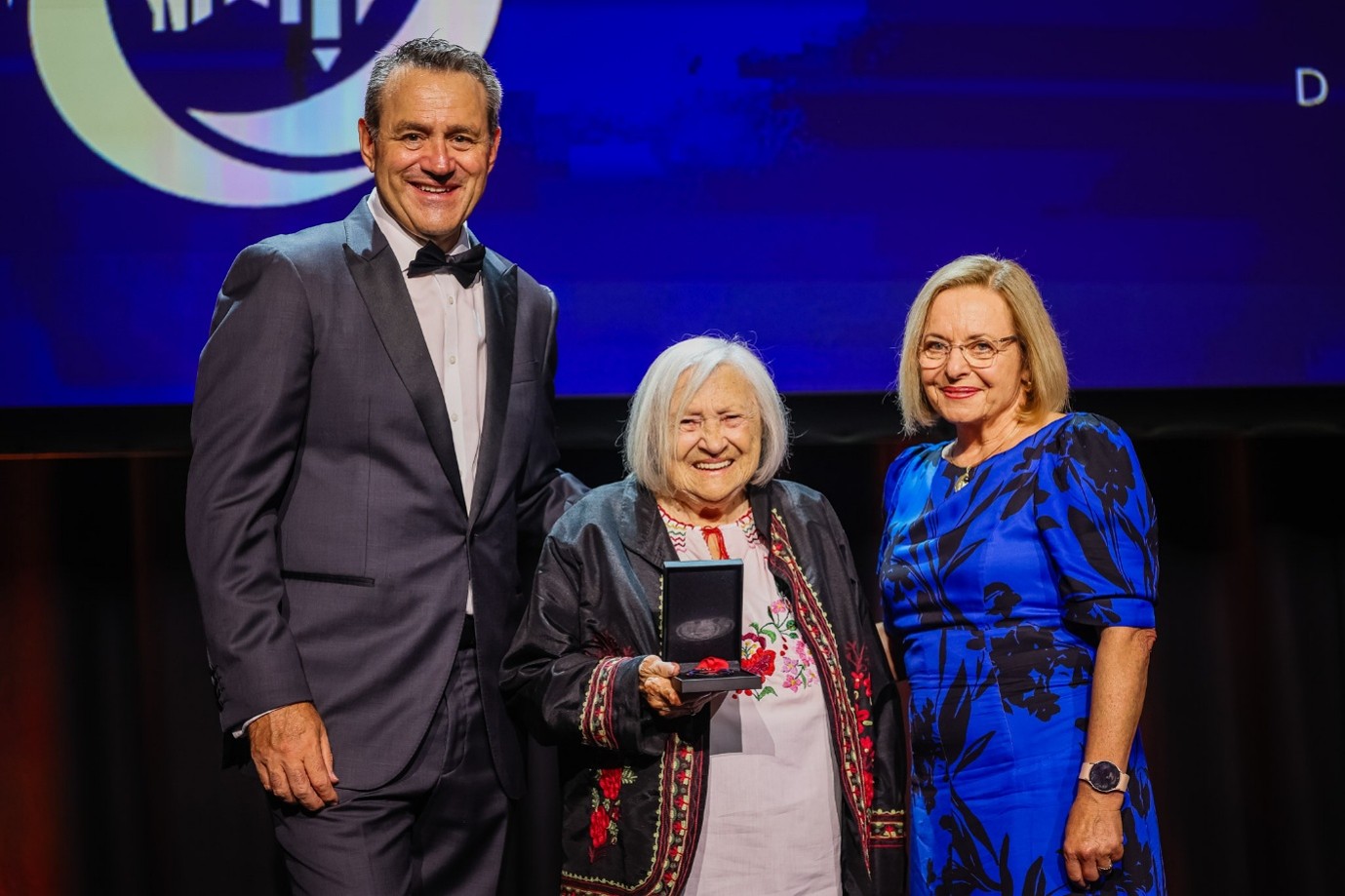
After fleeing her native Hungary, rebuilding her life in Australia and dedicating more than five decades to helping others overcome language barriers, Marta has become one of a pillar of the Hungarian and language services communities. In recognition of her extraordinary contribution, Marta was recently awarded the 2026 Multicultural NSW Interpreters and Translators Medal.
This year’s Refugee Week theme – A Million Stories – acknowledges the one million people who have received permanent humanitarian visas in Australia since 1947 – and Marta is one of them.
Her story stands as an inspiring example of how language, determination and community connection can transform lives.
A journey shaped by displacement
Born in Hungary in 1932, Marta’s early life was shaped by war and displacement.
In 1945, as Russian forces advanced through Europe, she and her family fled their homeland and sought refuge in Germany, where they lived as refugees for almost six years.
Despite the uncertainty of those years, Marta discovered a passion that would shape the rest of her life. While attending the Niederaudorf Hungarian College for Girls in the Bavarian Alps, she developed a gift for languages, becoming fluent in German and studying Latin, English and French.
“I have always seen languages as the opening gateway to experiencing new cultures,” Marta said.
In 1951, Marta and her family migrated to Australia under the United Nations Displaced Persons Scheme. After a 65-day sea voyage and time spent at Bonegilla Migrant Camp in Victoria, they began building a new life in Australia.
“When I first arrived in Australia, the Australians I met didn’t know anything about my country,” Marta recalled.
“They would ask me: are there horses in Hungary? Is there electricity?”
Building bridges through language
As Australia became increasingly multicultural, Marta used her language skills to support others navigating life in a new country.
Following the 1956 Hungarian Revolution, she helped establish Hungarian Caritas, providing support to newly arrived Hungarian refugees and helping them settle into Australian life.
She became involved in the establishment of the Telephone Interpreting Service (TIS) in 1972 and later contributed to the creation of the National Accreditation Authority for Translators and Interpreters (NAATI), helping to professionalise the interpreting and translating sector in Australia.
One memorable assignment involved interpreting instructions from a doctor to a woman giving birth in the Australian outback.
“Telling her when to push, when to breathe… that was exciting!” she recalled.
Recognition for a lifetime of service
Today, Marta continues to work as an interpreter, regularly travelling to communities like Orange, Wollongong and Port Macquarie and beyond.
“I couldn’t not work – I wouldn’t know what to do with my time,” she said.
Her dedication to the profession, and to the multicultural communities she serves, was recognised with the 2026 Multicultural NSW Interpreters and Translators Medal.
Are you a certified interpreter and/or translator? Consider a career with Multicultural NSW
For people who speak more than one language, interpreting and translating can offer a rewarding career that combines lifelong learning, meaningful community impact and opportunities to connect with people from diverse backgrounds.
Through the Multilingual NSW Academy, emerging interpreters and translators already certified by NAATI can access training and professional development opportunities to build specialist skills, gain experience and grow their expertise.
If you’re a NAATI-certified interpreter and/or translator, you can submit an Expression of Interest form to work with Multicultural NSW.