
Ramneek Singh: A journey as a Sikh Australian leader
Ramneek Singh is a strategy consultant, community builder and Sikh Australian leader, working in financial services and multicultural engagement in NSW.
As an Associate Director with Monitor Deloitte, he works on strategy and transformation programs for financial services across Australia and Papua New Guinea.
Ramneek also plays a role in community leadership across the state. He is both a Multicultural NSW Advisory Board Member and the Chair of the Western NSW Regional Community Network, where he aims to strengthen regional voices, equity and representation.
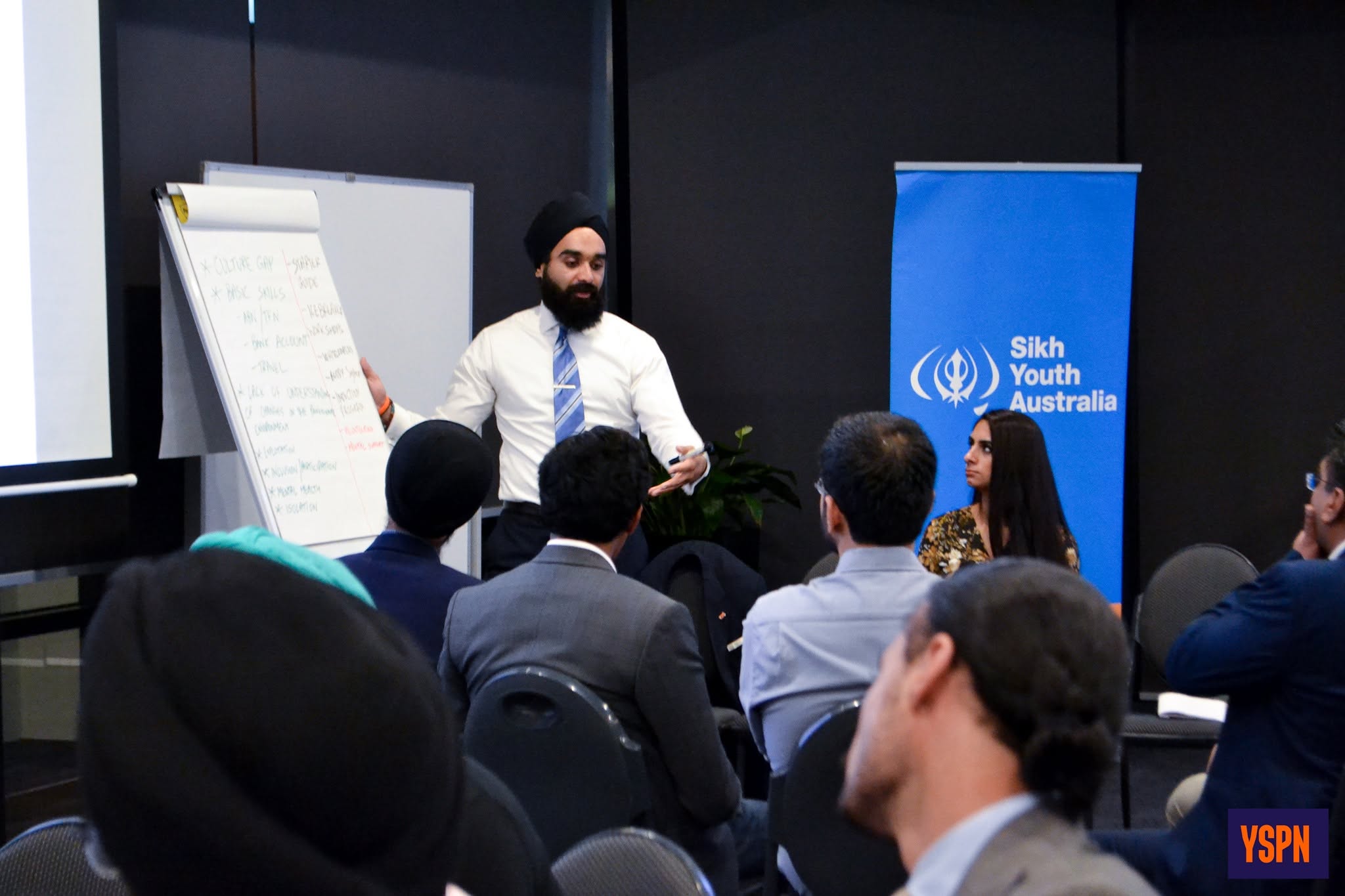
A former Chair and long-serving leader of the Young Sikh Professionals Network, he has helped build platforms that help to amplify the voices of young Sikh Australians and connect them to new opportunities.
“So many of the different opportunities that I’ve had, have come through engaging with my community through youth camps, through the Gurdwara (the central place of worship in Sikhism), or even randomly bumping into someone because they notice I’m a Sikh.”
Ramneek’s cultural story begins with the woman who first taught him language and faith.
His maternal grandmother lived with him and was central in shaping his connection to Sikhism.
“I learned a lot about how to read and write Punjabi from her,” he recalls, crediting hours spent reading janam sakhis, the biographical accounts of the ten Sikh Gurus.
“From a physical expression of identity point of view, which I embody to this day, that was probably a result of my relationship with my maternal grandmother.”
Those early lessons were tested with the practical realities of childhood in Australia. As a primary school student with a kesh – the uncut, traditional Sikh hairstyle – swimming lessons became a burden.
“It used to give me back problems and I struggled with the experience,” he says.
In year two of primary school, he made the difficult decision to cut his hair, knowing what it meant to his Sikh family.
“Cutting your hair is a really big call,” Ramneek says.
By the time he was in his early teens, Ramneek chose to re-embrace the physical markers of Sikh identity on his own terms.
“I made the choice to keep my hair and represent and embody the Sikh identity.”
When his family moved from Inner West Ashfield to Glenwood in Western Sydney, he found a new environment and a tighter local community.
Being surrounded by other Sikh and South Asian families, as well as classmates from many backgrounds, his life was normalised.
Sikh youth camps deepened his understanding of faith and gave him senior role models who showed what was possible for young Australian Sikhs.
By the time Ramneek graduated from university, the pattern that would define his community work was clear.
Alongside a career in finance and strategy, he wanted to create a leadership platform to bring younger generations of Sikhs together.

In 2012, he co-founded the Young Sikh Professionals Network (YSPN).
“Being a first-generation migrant community and being of Sikh descent, we have more that unites us than separates us,” he says.
YSPN’s first event brought together more than a hundred young professionals. The network grew into a trans-Tasman community with chapters in Sydney, Melbourne, Brisbane, Perth and Auckland, as well as digital reach into other countries.
The Sikh concept of seva, or selfless service, is the uniting thread that runs through Ramneek’s story.
“Seva is a really critical driving force for me,” he says.
“We were a volunteer organisation to begin with – you’re doing it at your own expense, out of your own generosity for others.”
Ramneek’s appointment to the Multicultural NSW Advisory Board has been important to him.
“It gives me an insight into the room where it happens,” he says.
“To listen to people across the community with diverse experiences and seniority and hear their perspectives on really important issues.”
His experience has taught him that the best outcomes come from grassroots organising and practical networks.
“It’s important for people to unite and help solve some of the problems we face as a community.”