
A voice for young workers
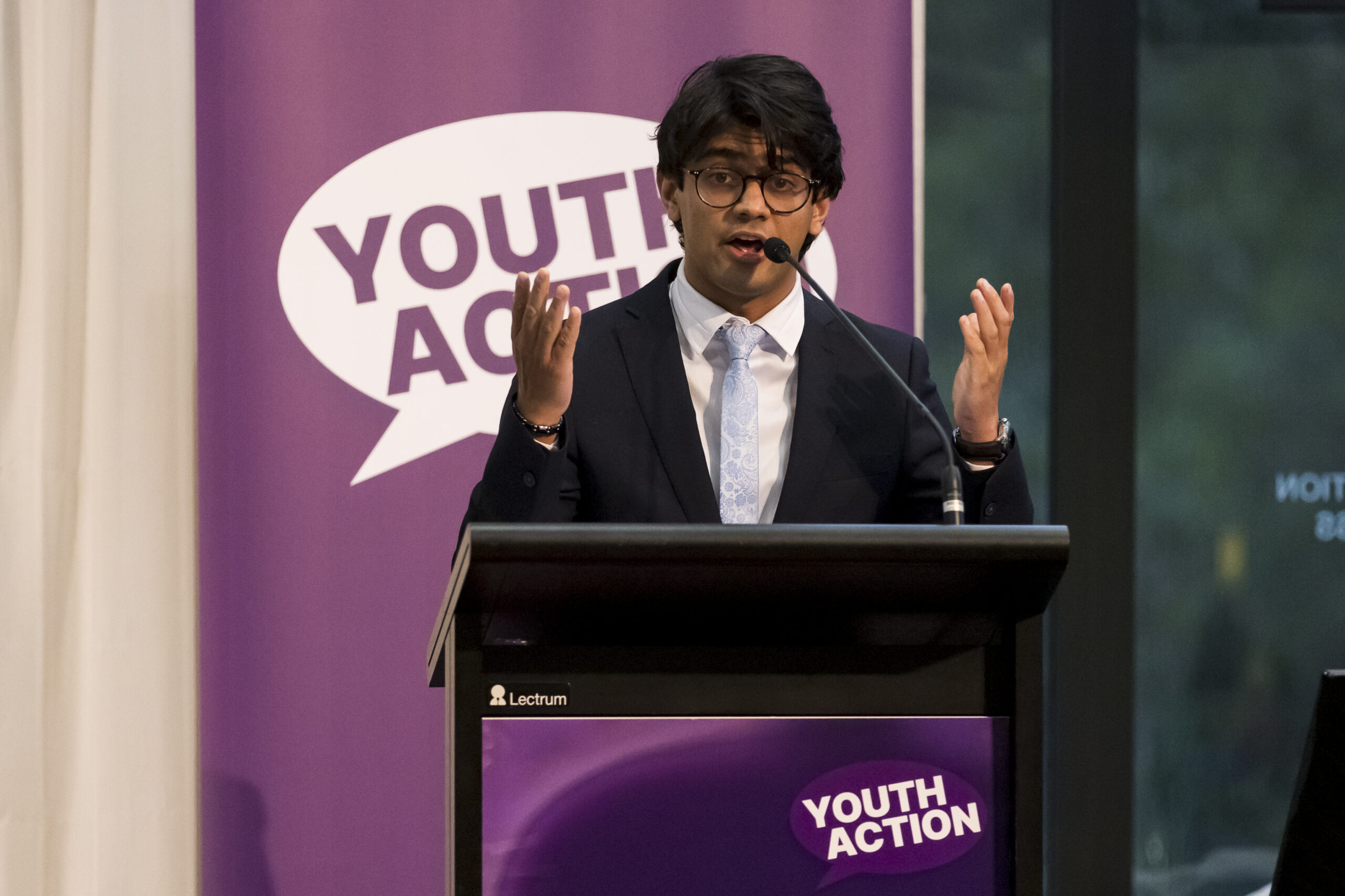
Khushaal Vyas is an employment lawyer, educator, writer and a member of the Multicultural NSW Advisory Board. His work centres on young people navigating early employment and problems at work.
Raised in Western Sydney, Khushaal learned early that opportunity is both a gift and a responsibility.
“Good things follow when people decide that they are going to use their voice,” Khushaal says.
“Especially when it comes from a place of the basic respect and empathy that Australia is famous for.”
From Kenya to Wetherill Park
Khushaal’s family story crosses Kenya, India, the United Kingdom, and Australia.
His father grew up in Kisumu, a regional town several hours from Nairobi in Kenya. His grandfather had migrated there from Gujarat, India, to work in the sugarcane industry.
Khushaal’s father studied hard and got the marks to study medicine in Cardiff in Wales.
His mother studied law and commerce in Gujarat and came to Australia as a young professional. She built a career in customer care while mastering life in a new country.
The Vyas family first settled in Merrylands, then made a home in Wetherill Park. The area is home to a diverse community with strong Arab, Southern European, Vietnamese and South Asian communities.
At primary school he remembers learning about different cultures from all over the world.
“Our school had such a big melting pot of different people,” Khushaal says.
The environment made cross-cultural connection feel natural.
Public speaking became his foundation skill. At home, his father would call ‘impromptu time’, and throw a random topic at him, which over time developed his confidence.
“Public speaking opened so many doors for me, whether it’s advocacy at work or social commentary through media,” he says.

A desire to serve sparked by inspirational female family figures
Khushaal’s desire to serve was shaped by two inspirational women in his life – his maternal grandmother and his aunt, both in India.
His grandmother worked as a gynaecologist into her nineties, often seeing people who could not afford to pay. As a child, Khushaal watched strangers travel long distances to receive her care.
His aunt became a writer and social activist in the Narmada Bachao Andolan, a movement resisting the displacement of indigenous tribal communities in India.
“It’s only when you’re older that you fully appreciate the extent of that sort of work and advocacy,” Khushaal reflects.

Khushaal’s strong pull to social justice advocacy
Khushaal’s own civic pathway began early. In Year 7 he joined the Fairfield Youth Advisory Committee after spotting a notice in the local paper.
It was a “formative few years,” he says, crediting Fairfield Council for listening to young people and investing in their skills.
At university, Khushaal’s social justice focus moved from theory to practice. With Wiradjuri lawyer and advocate Teela Reid, he co-founded a volunteer program that took UNSW law students to Dubbo for legal education and community work.
They made a short film, Yindyamarra: A Documentary and built relationships that endure to this day.
“Whenever I go back to Dubbo, I still catch up with the local Aboriginal community organisations and, of course, Wiradjuri elder Riverbank Frank,” he says.
Khushaal trained in corporate law with Baker McKenzie. It is a path he values for the rigour and mentorship, yet he always felt the pull of community work.
“You reach an inflection point,” he says.
“The longer you stay the more comfortable you get, but I needed to make a jump.”
That pivot led to Youth Law Australia, where he represented people under 25 for free on issues at work. He also teaches the next generation as a lecturer in employment law at UNSW.
The cases he sees are a mirror of the challenges facing young workers today.
“You see it every day,” he says.
“There is a level of vulnerability for young people entering the workforce, whether it’s dismissal, discrimination, underpayments, sexual harassment or coercive contracts that young people have been pressured into.”
Khushaal’s response is practical. He pairs casework with education in communities and schools, so people learn their rights before a crisis.

Cricket, chai, and community
Away from the office, Khushaal enjoys the simple pleasures, whether it’s playing cricket with his childhood mates or chatting with friends and strangers at chai bars.
“I’m a bit of a chai snob and for me, a chai bar is the equivalent of a pub but serving tea. Just people from different backgrounds swapping stories.”
Khushaal calls his appointment to the Multicultural NSW Advisory Board a privilege.
“I’m very excited to be able to contribute to a lot of different multicultural communities across the state,” Khushaal says.
“To be able to support and play some sort of small role in that advocacy and work is a really special privilege that I don’t take for granted.”
His advice to any young person who wants to serve is simple. Step up and participate.
“Imposter syndrome is real. Do not self-select out. Change will not happen if we choose to sit ourselves out.”