
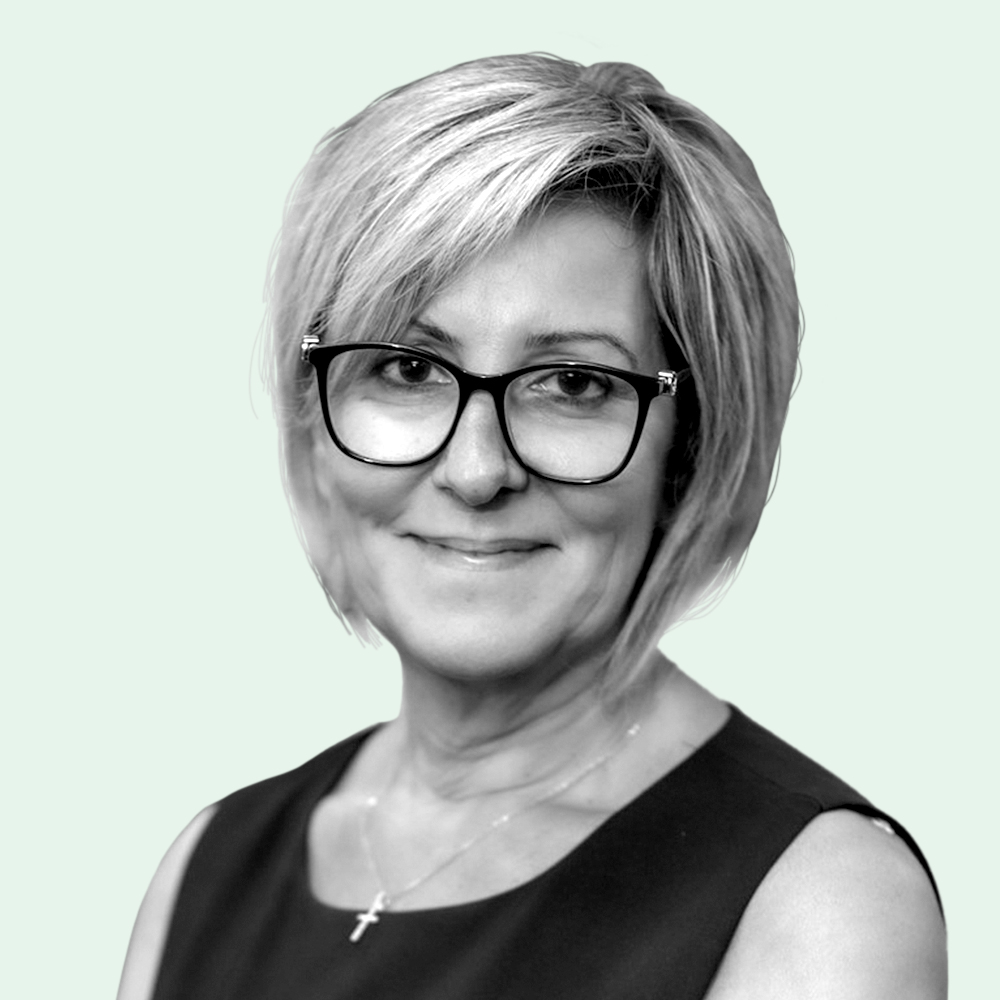
Elfa Moraitakis – Elevating the voices of Western Sydney’s communities
Community leader Elfa Moraitakis’s life has been shaped by migration and a belief that systems can, and must, change.
For more than 15 years, Elfa has worked alongside migrant and refugee communities in Western Sydney. Nine of these years served as CEO of SydWest Multicultural Services.
Elfa’s Australian story begins in Surry Hills, where she was born at the Women’s Hospital and raised by her Greek grandparents from Crete.
Her grandmother taught her to read the Greek letters from the newspaper. “Before kindergarten, I knew no word in English. It was all Greek to me.”

Her earliest memories are from what she calls “a cul-de-sac of cultures,” made up of families from many European backgrounds.
None of them spoke English, “but there was a willingness and warmth in how they made themselves understood.”
She remembers her grandmother’s small house becoming a community haven.
“My grandmother’s house was the free daycare centre for the children in the neighbourhood.”
“They just made it happen, and it was beautiful.”
Elfa saw her mother working multiple factory jobs to build a life in Australia.
“Growing up in a migrant family, I witnessed strength, resilience and my mother’s determination to build a new life in a new country.”
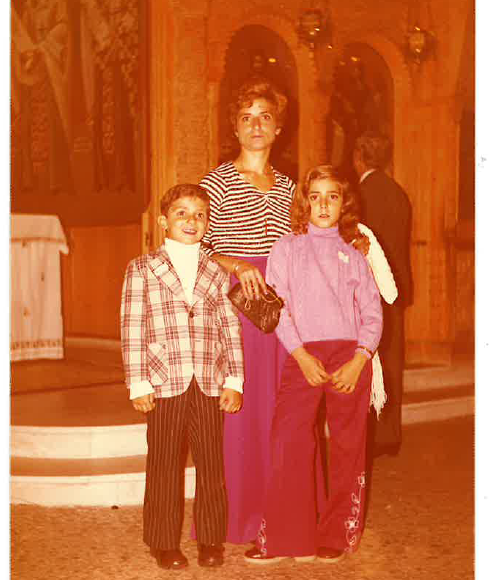
Her grandparents’ journey from the Greek island of Crete to Sydney shaped her understanding of contribution. Neither of her grandparents had been to school, and her grandfather took pride in the bridges and roads he helped build while he was active in his own community and a founding member of the Cretan brotherhood in Sydney.
Life changed suddenly when, as a child, her family returned to Crete.
She recalls the excitement of boarding the plane and then finding herself in “a very different world”. She attended primary school in an old building where unexploded wartime grenades were part of the school’s safety talk.
Political tension between Greece and Turkey added uncertainty.
“My initial memories from Crete are not necessarily pleasant,” she says.
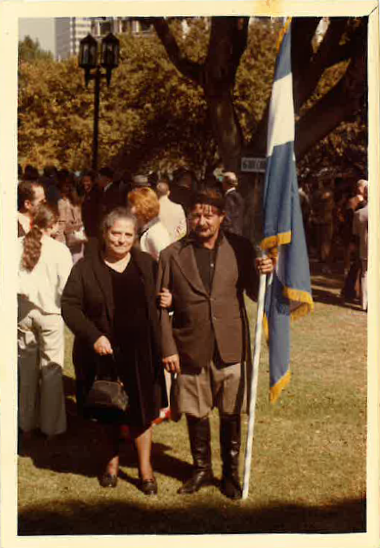
After finishing high school in Crete at 17, she told her mother she was returning to the country of her birth.
“I had no fear, I had no hesitation, but I had a lot of courage,” she says of boarding the plane alone to stay with family.
Returning to Sydney brought a culture shock. Greece had moved on, “but the older Greek Australian community had stayed in the cultural bubble of the 1960s.”
“I was very different to them, and they were very different to me,” she recalls.
These differences sharpened her understanding of how culture evolves and how easily people can feel like ‘the other’.
Determined to study, Elfa enrolled at the University of New South Wales. Struggles with English tests did not dent her confidence. This is the place she discovered sociology, politics, Aboriginal Studies and Islamic Studies.
She graduated in sociology, completing Greek Honours at the University of Sydney.
Her first job was at a Greek newspaper, immersing her in community life.
“I was actually the first Greek female journo in Sydney,” she says with pride.
When the newspaper was gifted to the church, the staff were let go overnight – a shock she now calls “a blessing” that pushed her out of her comfort zone and into a role at Cancer Council NSW.
In that new career, she led a small team passionate about language access.
“It was an important role. People being able to read a chemotherapy or radiotherapy booklet in their own language, to be able to ask questions in their own language, was powerful.”
When her multicultural information unit was closed, she saw firsthand how migrant community needs seemed to be treated as an afterthought.
“I started realising that there’s a lot of box ticking in everything that we do,” she says.
“I’m in a system that is not equitable – there are a lot of cracks that people fall through and never feel a sense of belonging. But how do I get into the system to help shape it?”
That question became her mission.
Elfa chose to build experience working in migrant resource centres and governance roles. She joined the board of Settlement Services International, served six years on the NSW Council of Social Service Board and later the Council on the Ageing NSW and The Wash House, a local DV support service based in Mt. Druitt.
Working in aged care reconnected her to her grandparents’ generation.
“I could see the stories of my grandparents every day,” she recalls.
“People that had aged in Australia and never had the chance to deal with their migration experiences. No one ever asked them how they felt leaving parents and homeland behind.”
Today, as CEO of SydWest Multicultural Services, Elfa leads a Western Sydney grassroots organisation built on trust and belonging.
“SydWest is a place where people feel supported and feel that they belong.”
“For seniors, it is a place of healing, and for young people, a place not to feel limited because of their identity or language skills.”
As a member of the Multicultural NSW Advisory Board, Elfa feels privileged to bring not only Greek Australian perspectives, but also “the voice of the communities I serve in Western Sydney.”
Through monthly community leaders’ forums, she hears about social cohesion, systemic racism and cracks in the safety net.
“These are the voices that I feel the responsibility to elevate to the board,” she says.
Her purpose remains clear.
“My bigger picture,” she concludes, “is of a society where inclusion is embedded in systems, and where belonging is not the exception, but the norm.”