

Julie Lim – A champion for the power of language
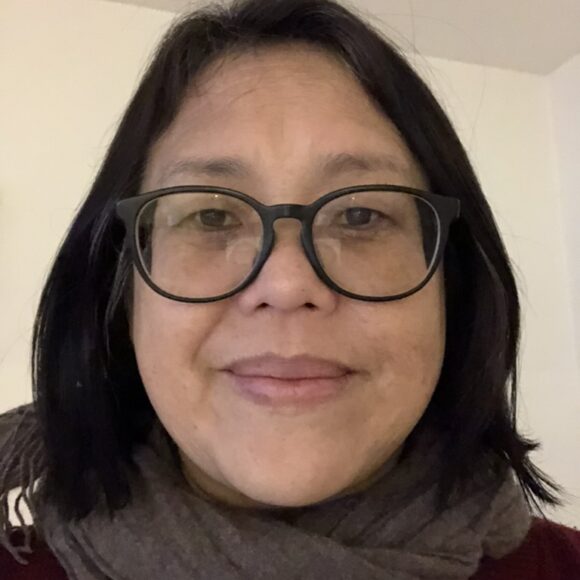
Dr Julie Lim is a language teacher, educator and researcher with a background in applied linguistics and Asian studies. She is a Fellow of the Higher Education Academy UK and has more than 25 years of experience teaching and assessing the English language, in Australia and overseas.
Julie lectures at the University of Technology Sydney and has built industry leading expertise on programs that train future English teachers.
An Australian of Chinese heritage, Julie’s academic and professional focus is clear.
“My research examines the challenges of people whose community, education or professional experiences are undermined by limited proficiency in or access to language.”
Julie’s Australian story begins in the tropical north of Australia.
“My maternal grandparents were born in Darwin to Hakka Chinese migrants,” she says. Her great, great grandfather arrived in the 1880s to work on the Darwin to Pine Creek railway line.
Julie’s grandmother was one of 14 children in the Moo family living in Darwin.
After they married, her grandparents got on a boat to Thursday Island in the Torres Strait, where they opened a bakery. Evacuating south in 1941 with the advent of war, they joined relatives in Sydney.
Her maternal family history is a great source of pride, including her great aunt Mavis Moo, who enlisted as an ANZAC nurse.
Five other great uncles served in various roles in the Australian military in WW2.
Julie’s father had a different and equally unique journey to Sydney. The Hokkien-speaking Lim Family migrated from the Chinese province Fujian to Jakarta, Indonesia in the 1930s for work.
Later, Julie’s father Gerald moved to Melbourne to finish high school before locating to Sydney to study medicine at Sydney University, where he met Julie’s mother Sylvia, who was studying a teaching degree.

Julie grew up in Randwick as part of a tight-knit extended family.
“There was a block of four flats, my grandmother owned the flat downstairs, my uncle lived in number three, and we lived in number four.”
Whilst she lived a traditional Australian childhood outside her home, her Chinese family provided her with daily access to traditional Chinese Taoist-Buddhist practices.
Her grandmother would pay tribute to ancestors on specific days in the lunar calendar, there was an altar in the garden, and her uncle would light joss sticks every morning.
Julie’s early experience with learning languages was harsh, yet formative.
Her mother didn’t speak Chinese, and her father’s hard-line rule of speaking only Chinese at the dinner table led to many silent dinners.
She and her siblings begrudgingly attended Saturday Chinese language school, however her love of languages blossomed when she started attending Sydney Girls High School.
There, she learnt German, as well as Indonesian, to engage more deeply with extended family in Jakarta.

Language shaped her career path. After a year in Beijing as a foreign student studying Chinese, a planned year of teaching English in China six years later turned into almost a decade.
“I loved it and I hated it,” she says of this period in Shanghai.
One of her strongest memories was her first class. She walked in prepared and professional, yet the room fell quiet.
“I realised they were expecting a foreign teacher, and I didn’t look like a foreign teacher – even though I was a foreign teacher,” she says.
The moment impacted her deeply, but it became a driver.
“I had to work harder to win the trust of my students,” she recalls.

That experience also clarified her identity as a Chinese Australian.
“Although I lived in China, learnt Mandarin, and people saw me as Chinese, I felt more Australian as time went on.”
Her experience inspired her doctoral research on the experience of being overseas as a Chinese person and navigating race, belonging and identity.
After returning to Australia, she finished her doctorate and built a career across assessment and teacher education, including roles as an English language examiner and testing administrator.
She then joined UTS as a full-time lecturer in TESOL and Applied Linguistics.
In the UTS classroom, Julie prepares future teachers to recognise the strengths their learners bring.
“I teach a subject called ‘the multilingual learner’, where teacher trainees consider the real makeup of a 21st century class and how to support it.”
One of the key insights Julie has learnt on her journey is the power of language as an enabler for migrants who arrive with strong qualifications.
“Yet language can be an impediment to them being able to work in their field.”
Beyond increasing participation and access, her advocacy extends to high-stakes settings.
“Having access to someone who speaks your language and can communicate with you what is happening in something like a courtroom or a police interview ensures that you’re aware of what’s going on,” she says.
“If you don’t have that access, there could be injustices that ensue.”
Her message to educators is a challenge and an invitation.
“Don’t view someone’s first language being a language other than English as a deficit.”
Instead, she says, teach with the patience and the knowledge that linguistic competence can unlock doors that are closed for migrants.
“There are so many assets that every learner brings to their learning.”